
Dragon Kind | Website, Game, Quiz, Buy Now
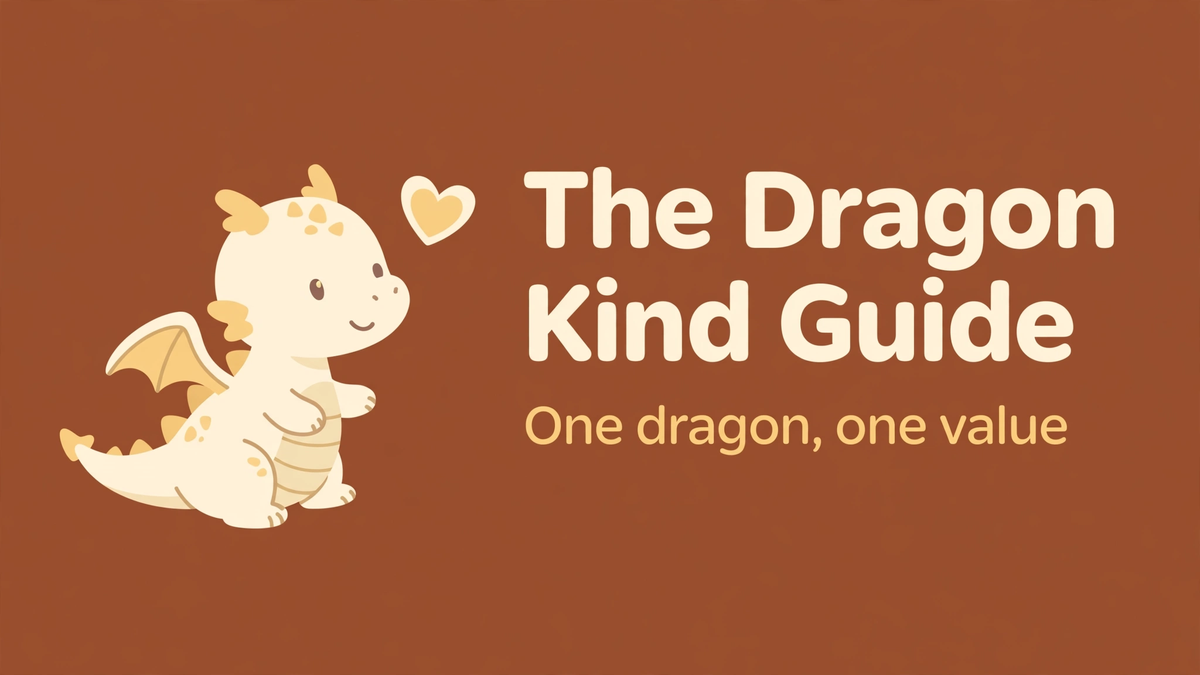
The Dragon Kind is a picture-book series by British children's author J.K. Angood (Jennifer Kay Angood) — gentle stories built around a simple idea: one dragon, one value. Each book introduces a dragon who embodies a kindness value, giving young readers a memorable character to attach big feelings to. If you're a parent, grandparent, or teacher looking for kindness books for children, this is the series to know. This is an independent guide, not the publisher or the author.
Quick facts
- Author: J.K. Angood (Jennifer Kay Angood) — British children's book author.
- Series: "The Dragon Kind" — picture books about kindness, empathy, and emotional learning.
- First book: "Kindlyn: A Gentle Guide to Kindness", illustrated by Astra.
- Concept: Each dragon represents one value — kindness made visible through character.
- Official site: thedragonkind.co.uk
- Audience: Young children (picture-book age), parents, and early-years educators.
The concept: dragons as feelings teachers
Children's books have always used animals to make abstract ideas concrete — and dragons are a perfect vehicle for kindness because they're big. Big feelings, big reactions, big mistakes, big apologies. The Dragon Kind's premise — one dragon per value — gives children a character to point at when the real-world lesson lands: "that's like Kindlyn." That's how emotional learning actually works at picture-book age: not through lectures, but through characters children internalize and imitate.
Kindlyn: A Gentle Guide to Kindness
The series opener introduces Kindlyn, the kindness dragon, with illustrations by Astra. As a "gentle guide," the book works on two levels: a story children enjoy and a framework adults can reuse — the dragon becomes a shared vocabulary for the family or classroom. ("What would Kindlyn do?" is a question that lands very differently from "be nice.") The values breakdown: Kindlyn's values explained.
Why kindness books work at this age
Picture-book age (roughly 3–7) is when children are building their emotional vocabulary — learning to name feelings, recognize them in others, and regulate their own. Books are one of the most effective tools for this because stories create emotional distance: it's easier for a child to talk about a dragon's big feelings than their own. Research in early-years education consistently finds that social-emotional learning in this window predicts later school success better than early academics. A kindness dragon isn't fluff — it's curriculum-adjacent.
Using the books at home
Read it once for the story, then read it again for the conversations. The second read is where the value lands — pause at the moments where the dragon chooses kindness and ask what the child would do. Give the dragon's name to the behavior: praising "a very Kindlyn thing to do" reinforces more than praising "being good," because it's specific and tied to a character the child loves. Keep the book accessible, not shelved — books about values work through repetition, and the one on the low shelf gets read ten times more than the one in the cupboard.
Using the books in the classroom
For early-years educators, the one-dragon-one-value structure is classroom-ready: each book can anchor a week of circle-time discussions, role-play, and "kindness spotting" (children nominating classmates for dragon-worthy behavior). The character framework also helps with the hard moments — a conflict between children becomes "what would the kindness dragon do?" instead of a lecture. Pair with the illustrator's visual style for art activities: children drawing their own kindness dragons personalizes the lesson.
Where to find the books
Start at the official site, thedragonkind.co.uk, for the series, the author, and where to buy. As with any children's series, check your local library too — librarians are the original book-recommendation algorithm, and they'll know if the series has companion titles or activity materials.
How the series compares
The kindness-book shelf is crowded — from "Have You Filled a Bucket Today?" to Julia Donaldson's gentler tales — so what does a dragon add? Specificity. Most kindness books teach kindness as a general virtue; The Dragon Kind teaches it as a character trait attached to a character, which is stickier for young minds. Children don't remember abstractions; they remember dragons. And the British picture-book tradition it sits in — warm illustration, gentle rhythm, read-aloud-friendly language — means it works in the hand, not just in the concept. If your child already loves dragons, this is the rare series that channels that obsession into emotional learning instead of just fire-breathing.
Gifting the series
Kindness books make excellent gifts precisely because they're useful — a birthday present that also teaches something is the rare win-win. For new parents, a first-book copy of Kindlyn is a thoughtful baby-shower or first-birthday gift; for teachers, a classroom set anchors a term's social-emotional work. Wrap it with a note about the dragon's value — "for the kindest kid I know" — and the gift becomes part of the lesson.
FAQ
Who wrote The Dragon Kind?
J.K. Angood (Jennifer Kay Angood), a British children's author.
What age is it for?
Picture-book age — roughly 3–7, plus the adults who read to them.
Which book comes first?
"Kindlyn: A Gentle Guide to Kindness," illustrated by Astra.
Is it a series?
Yes — built on the one-dragon-one-value concept, with Kindlyn (kindness) leading.
Where can I buy it?
See the official site thedragonkind.co.uk for purchase options.
The series also has a quiet superpower for reluctant readers: dragons are cool. A child who won't sit still for a book about "being kind" will sit still for a book about a dragon — and absorb the kindness lesson as a side effect. That's not trickery; it's good pedagogy. Meet children where their interests are, and the values come along for the ride.
And for collectors: picture books in a series are worth buying as they release, not years later when you're hunting out-of-print copies. Series openers in particular tend to vanish first. If The Dragon Kind becomes your child's favorite — and kindness dragons have a way of doing that — grab the next dragon's book on release day.
Bottom line: a kindness dragon is a small idea that does a big job — giving young children a character to love and a vocabulary for being good. Start with Kindlyn, and let the dragon do the teaching.
Hiroshi Watanabe
Original Post
Hi
Join